
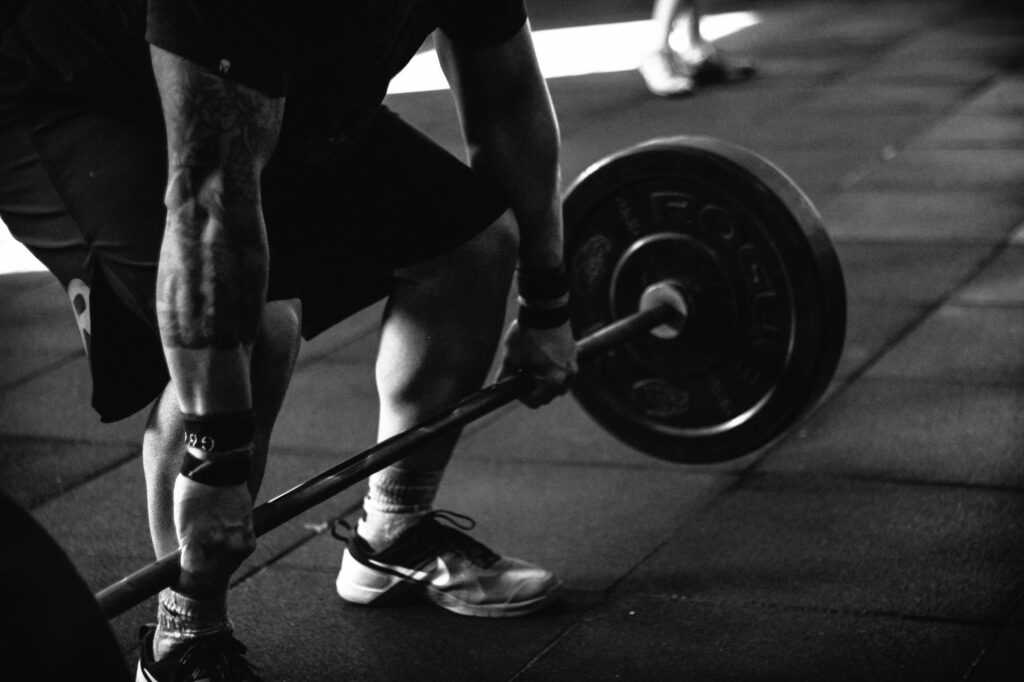
There’s a molecule that connects the moment a sprinter leaves the blocks and the moment a poker player calls an all-in. It’s epinephrine (adrenaline), and according to research published in Frontiers in Physiology in 2025, moderate exercise raises plasma epinephrine concentrations by 2–4 times, while short-duration, very high-intensity effort can push levels up by as much as 5–20 times. The body doesn’t distinguish between physical and psychological demands. It responds to both with the same hormonal cascade, the same heightened heart rate, the same sharpening of attention.
If you enjoy live casino gaming, whether you’re playing blackjack on a live online casino for UK players or sitting at a felt table in a land-based venue, you’ll recognise that feeling. The difference between sport and strategic gaming is smaller than most people assume, at least from a physiological standpoint. What follows is a look at what the science tells us about managing that shared hormonal state and why doing so is one of the most underrated edges available to any player.
What Adrenaline Does at Its Best (and Its Worst)
Adrenaline is not a problem. It’s a solution the body evolved over millions of years. When you push hard in the gym, epinephrine mobilises energy stores, sharpens focus and primes every system for performance. That same 2025 Frontiers in Physiology research found significant epinephrine increases across all major exercise types: aerobic exercise accounted for 36.96% of the overall increase in plasma concentration, anaerobic for 35.42% and strength training for 27.45%. In other words, there’s no training style that doesn’t engage this response.
Peak epinephrine levels typically arrive within 5–10 minutes of exercise onset. At that point, your body is operating at a heightened state of readiness that is, under the right conditions, exactly what you want for adrenaline management gaming.
The complication arises when that same arousal state carries over into a setting with no physical outlet for it. At the gaming table, with your body primed for movement and none coming, the energy that would otherwise power a sprint or a set of deadlifts gets directed inward. That means faster thinking, yes, but also shallower thinking. The narrowing of focus that helps you track a ball can make you track only the next card and ignore the broader strategic picture.
This is the double-edged quality of adrenaline. Used well, it’s an asset. Unmanaged, it shortens your decision-making horizon in ways you may not even notice at the time.
When Stress Sits Down at the Table
There’s a meaningful body of research on what happens to decision-making under stress, and the findings are consistent enough to take seriously. A 2017 study published in Scientific Reports (PMC5587697) assigned 60 college students to either a stress condition or a control condition before a gambling task. Those who showed lower perseverance (measured as difficulty maintaining focus on demanding tasks) gambled more aggressively after a loss when stressed compared to the control group. The researchers identified the mechanism: excessive release of dopamine, noradrenaline and cortisol impairs executive control; it leads to rushed and unsystematic decision-making.
That’s a clinical way of describing loss-chasing, one of the most common and costly patterns in any form of gambling. Stress doesn’t make you reckless randomly; it makes you reckless predictably, by weakening the reflective system that keeps impulsive responses in check.
The somatic marker hypothesis, developed by neurologist Antonio Damasio, helps explain why. Under normal conditions, the brain integrates emotional signals (bodily sensations, gut reactions) with rational analysis to arrive at decisions. Under stress, the balance tips. The emotional, impulsive system gets louder; the deliberative system (working memory, reasoning, long-term perspective) gets quieter. You start playing the feeling, not the game.
A 2021 study in the Journal of Behavioral Addictions (Moccia et al., PMC8997220) added another layer. It found that gambling disorder patients showed reduced heart rate variability (HRV) reactivity compared to healthy controls. Decreased HRV was directly associated with impaired decision-making. Crucially, the same study identified that reduced interoceptive accuracy (the ability to read your own bodily signals accurately) predicted worse outcomes. If you can’t accurately perceive your own arousal state, you can’t manage it.
The lesson learnt across this research is consistent for adrenaline management gaming: your physiological state at the moment you make a decision is a significant variable in the quality of that decision.
Exercise, Breathing and HRV
Knowing the problem is useful. Having practical tools to address it is better. The research points to three evidence-based interventions that any player can build into their routine:
- A 30-minute aerobic session before play: A 2025 study in Drug and Alcohol Dependence found that a single moderate-intensity aerobic session significantly improved performance on both the Delay Discounting Task (Cohen’s d = 0.50) and the Iowa Gambling Task (Cohen’s d = 0.52), two established measures of impulsive and short-sighted decision-making. The session doesn’t need to be intense; moderate intensity is what the research supports.
- Slow breathing at 6 breaths per minute: A 2025 narrative review of 30 studies published in Stress and Health (PMC12341363) found that breathing at this rate maximises HRV by balancing the sympathetic and parasympathetic branches of the autonomic nervous system. Even a single 2-minute session produces measurable HRV gains. Extending this to 10–15 minutes decreases cortisol and increases restoration hormones including DHEA. It’s one of the most accessible self-regulation tools available.
- HRV monitoring: A 2023 study in Frontiers in Pharmacology (n=163 adults) found that people with addictive and gambling disorders show consistently lower HRV than healthy controls, even after adjusting for depression, anxiety and impulsivity. Lower HRV signals a reduced capacity to regulate emotional responses under stress. Tracking HRV before a session using a wearable gives you an objective indicator of your readiness.
For the science behind why slow breathing works so effectively, BBC Worklife’s explanation of the relaxation response bridges the physiology and the practical in clear terms.
If you’d spend 30 minutes preparing your body for a gym session, why wouldn’t you spend 2 minutes preparing it for an activity that demands equally sharp judgement?
The Future of Self-Regulation in Gaming
The interventions above are available to anyone right now, with no specialist equipment beyond a basic fitness tracker. But the direction of research in this area suggests the tools will keep getting more precise.
A landmark study published in JMIR Research Protocols in February 2026 (PMC12919748) enrolled 109 participants across Switzerland and Korea, equipping them with Apple Watches to monitor heart rate, HRV, sleep metrics and physical activity continuously. The aim: to build machine-learning models capable of predicting gambling episodes from physiological data and triggering real-time interventions before impulsive behaviour occurs. The body’s signals, it turns out, may speak before the decision does.
A separate development from Frontiers in Psychology (2021) illustrates how feedback can work in practice. Researchers created ‘e-Estesia’, a biofeedback serious game connected to a Polar H7 heart-rate sensor. Players received visual feedback tied to their heart rate and breathing rhythm: clear skies when regulated, storm clouds when arousal spiked. Among the 26 gambling disorder patients in the pilot study, women showed a particularly strong capacity to self-regulate their physiological state through the biofeedback mechanism. The key insight: making an invisible process visible turns it into something manageable.
Self-regulation of adrenaline is a learnable skill. The physiological signals are always there. The question is whether you’re paying attention to them.
The Sharpest Edge Is Knowing Your Own Body
Most performance discussions in gaming focus on strategy and probability. The research reviewed here points to the upstream variable (your physiological state before and during play) as deserving equal attention. A 30-minute aerobic session improves decision-making on tasks that directly mirror gambling scenarios. Two minutes of slow breathing at 6 breaths per minute increases HRV and begins to reduce cortisol. A morning HRV reading tells you something objective about your resilience for the day ahead.
None of this requires significant time, expense or specialist knowledge. It requires the recognition that your body and your game are not separate systems. The gym floor and the gaming table run on the same physiology. Athletes have understood this for decades.
As wearable biometrics become more sophisticated and embedded in everyday life, the players who can read and act on their own physiological data will carry an advantage that no strategy guide can replicate. The 2026 JMIR study is an early indicator of where this is heading.
The tools are evidence-based, accessible and already proven in peer-reviewed conditions. If managing your adrenaline takes under 30 minutes of preparation, what’s the argument for going in without it?

 Nealsuner Williams contributes to GambleFitnessSplash with articles that dive into fitness, gaming, and modern tech. With a passion for exploring how innovation impacts daily routines, Nealsuner helps readers discover smarter ways to integrate wellness and responsible play.